In 2014, Malawi’s first woman president Joyce Banda proposed affordable motorcycles to reduce youth unemployment.
Then, her hearers might have visualised registered motorcycles shuttling travellers quickly, cheaply and safely.
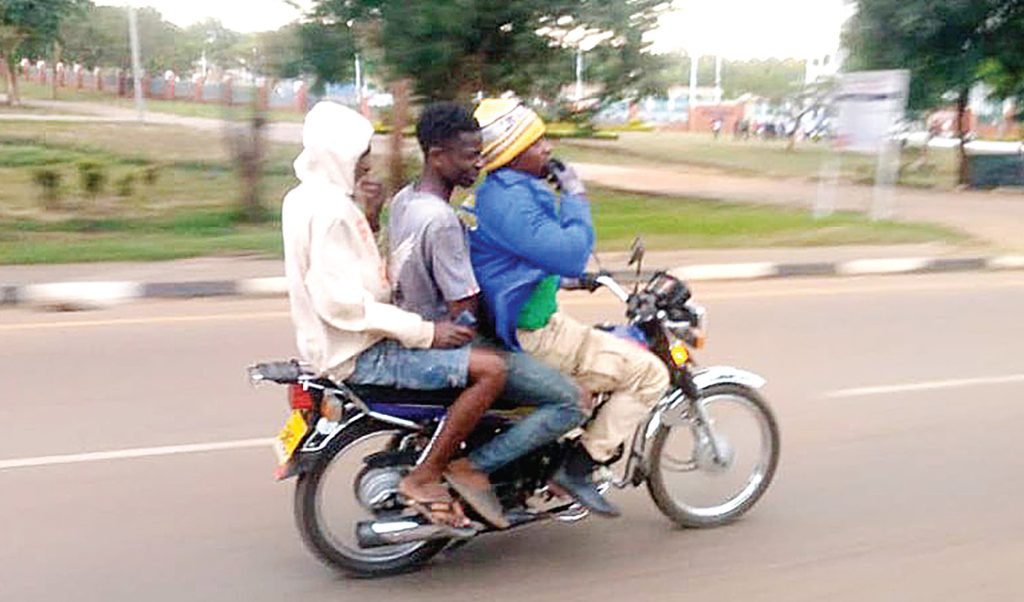
However, it triggered a deluge of deaths, injuries and disabilities that choke the country’s overwhelmed hospitals.
The frequent accidents that claim a life every three days compelled Kamuzu Central Hospital administrators in Lilongwe to reserve a ward for survivors who arrive in life-and-death state.
Away from the capital city, there are similar tales of kabaza tragedies.
Road safety and healthcare authorities say the anarchic transport business is crippling the country’s underfunded healthcare system, but the government remains slow to do something about it.
In December 2024, Minister of Finance and Economic Affairs Simplex Chithyola Banda proposed a voluntary tax window that will allow kabaza operators to register even smuggled motorcycles at “a small fee”.
However, the policy shift has little to do with saving lives despite mounting evidence that the unregistered bikes operated by unlicensed riders recklessly endangered road users’ lives.
“Firstly, the operators cannot obtain insurance, putting themselves and passengers at great risk in accidents. Secondly, knowing their operations are illegal, these operators often act recklessly, endangering public safety,” said Chithyola Banda.
He envisages the lax tax requirement lessening healthcare spending on patients hurt by the runaway motorcycles.
Last year, Salima North West member of Parliament Enoch Phale (Malawi Congress Party) and Thyolo Central’s Ben Phiri (Democratic Progressive Party) proposed a levy to lessen healthcare costs of kabaza accidents that account for 70 percent of admissions to public hospital’s wards for bone conditions.
Kabaza has become a death trap on the country’s risky roads, which recorded the world’s third-largest death rates in 2020.
Their recklessness leaves the riders, passengers and their families in tears.
Last August, Shamila Dzanja, a 13-year-old girl from Bangwe Township in Blantyre, lost her father in a motorcycle accident while returning from work
“The police told my mother that dad died on the spot. I’ve no one to buy me books and pay my school fees when selected to secondary school next year,” she laments.
This mirrors the deathly sting of the influx of cheap motorbikes from China via Tanzania and Mozambique.
Traffic police report that motorcycle accidents have increased by over 30 percent last year and the majority involved motorcyclists not wearing crash helmets.
The law enforcers blame it on reckless driving, overloading and poor roads.
The Department of Road Traffic and Safety Services reported 4 566 kabaza-related accidents that claimed 472 deaths between 2020 and 2023, representing 118 deaths annually.
Last September, Rumphi Police Station reported that kabaza had killed 61 people in the northern district since January 2024.
In Kanengo along the M1 in Lilongwe, a motorbike carrying two passengers and a baby collided with a vehicle, killing the motorcyclist and a customer while the survivors were rushed to Kamuzu Central Hospital with serious injuries.
“The motorcyclist was speeding and didn’t were a helmet. It was a terrible sight. I sympathise with the casualties’ families,” said eyewitness Naomi Mbewe.
As kabaza remains unregulated, hospitals at the receiving end of the preventable cases face a rising burden of providing treatment, care and support.
Esmie Kalitawo, from Ntchisi District, was hospitalisedfor months at Lilongwe Institute of Orthopaedic and Neurosurgery (Lion) Unit.
The fractured patient says the motorcycle accident changed her life permanently, detaching the youthful teacher from her learners and family.
This shows how kabaza, long seen as a solution to unemployment and transportation woes, has become the country’s deadliest killer.
However, politicians and law enforcers have become complicit to the neglected crisis.
In 2021, public demands for strict regulatory measures and a police-orchestrated crackdown stirred violent protests from the motorcyclists the law enforcers are supposed to bring to book.
Amid the quirky fightback held in Lilongwe, Minister of Homeland Security Richard Chimwendo Banda, now secretary general of the governing Malawi Congress Party, halted the clean-up and ordered the release of confiscated motorcycles, allowing the risky riders to operate freely.
The populist stunt has opened floodgates for reckless motorcyclists and frustrated efforts to make the roads safer for all.
Today, motorcyclists openly defy the new measures, including the mandatory wearing of helmets and stricter licensing.
Social commentator Lucky Mbewe says time has come for road traffic authorities to restore road safety through strict law enforcement and collaborative initiatives to empower the motorcyclists with the life-saving knowledge, skills, and attitudes.
“The current situation is alarming,” he said. “It’s imperative that we adopt a proactive approach to mitigate this crisis.”
Concurring, Inspector General of Police Merlyne Yolamu said the security agents will continue to enforce traffic regulations and educate the public on road safety.
“We need to take responsibility for our own safety on the roads, motorcyclists must wear helmets, obey traffic rules, and avoid overloading,” said the police chief.
Despite the tough talk, kabaza operators openly break traffic regulations as police watch uncaringly.
A recent study shows police officers and soldiers own 70 percent of the perilous motorcycles in cities, compromising law enforcement.
But National Police spokesperson Peter Kalaya says the security agency enforces the law without favouritism.
However, the breakdown in law enforcement says it all.
With 10 people dying every month to kabaza accidents, authorities have become enablers and their populism, indifference and opportunism only endanger lives.